

Building
Connections
Training
Do you want greater connection, community and a more harmonious society?
We believe isolation, loneliness and disconnection within and between communities are the underlying causes of almost all the issues we face as a country. And certainly two of the big ones: the mental health crisis and widening inequality and social polarisation.
If we can tackle loneliness we can unlock the solutions to many other problems too.
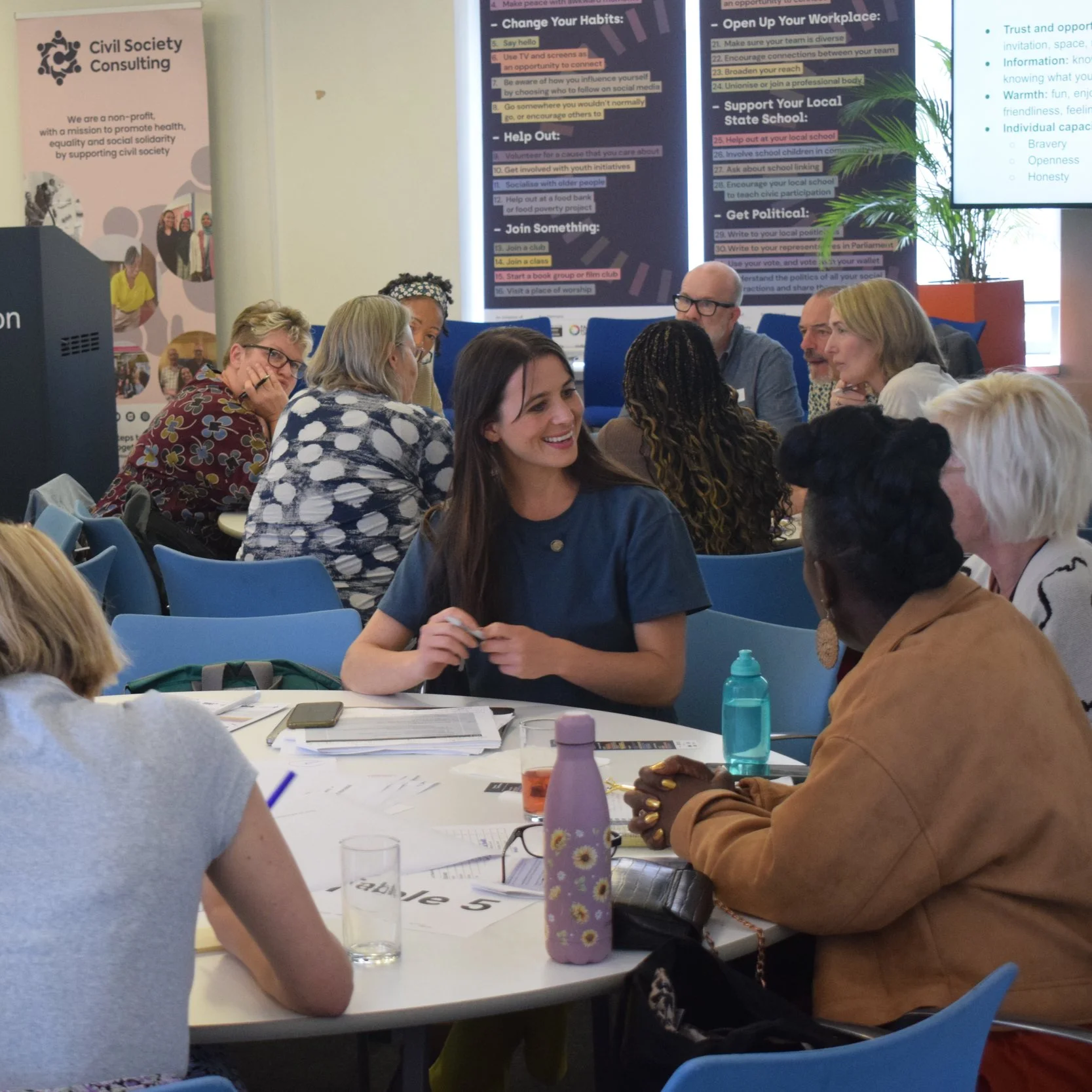
Our Building Connections Training is an energising and enriching experience, which gives you a framework for understanding loneliness, and a language for talking about it. We leveraging your knowledge and experiences to build a shared understanding with the other people in the room.
-
Loneliness has been called the public health crisis of our generation: loneliness is detrimental for mental and physical health and affects our productivity too.
We believe the problem is actually even bigger than that: loneliness is one of the main root causes of all the issues we work on at CSC. In particular, loneliness creates the conditions for hate, intolerance and social fragmentation (disconnection between different communities of people). Inequality and injustice thrives in a divided society.We have a vision for systems change. It is the system that has driven the steady rise in loneliness and decline in community. Tackling loneliness will help to create the conditions for changing that system positively.
Different people will be motivated to tackle loneliness for different reasons. We all need a deeper and a shared understanding of loneliness so that we can work in unison to create new behaviours in our neighbourhoods, places of work, places of learning etc.
Re-building connection and community is a bottom-up endeavour and we all have a part to play. Grassroots organisations, charities, libraries, schools, universities and workplaces are ideally placed to lead the charge. -
Our acclaimed training teaches the theory of loneliness, which is a relatively new social phenomenon. It’s interactive so, in the process, we build the shared understanding needed to empower you to transform your local environments and co-produce creative ideas.
We first developed the training for the Campaign to End Loneliness back in 2021. It has since been trialled and proven with over 500 people from all sectors across the UK and renamed the Building Connections Training.
It is a four-part workshop, which can be adapted for different people, organisations, networks or partnerships. Over two half-days, we learn about the causes and symptoms of loneliness, and most importantly, what we can do to bring about solutions.
As participants, we’ll call on your personal and professional experience to help us flesh out key theory, connect on a human level, and build a shared understanding among everyone in the room. This shared understanding creates a springboard for the fourth and final session coaching participants to develop action plans for tackling loneliness in their communities.
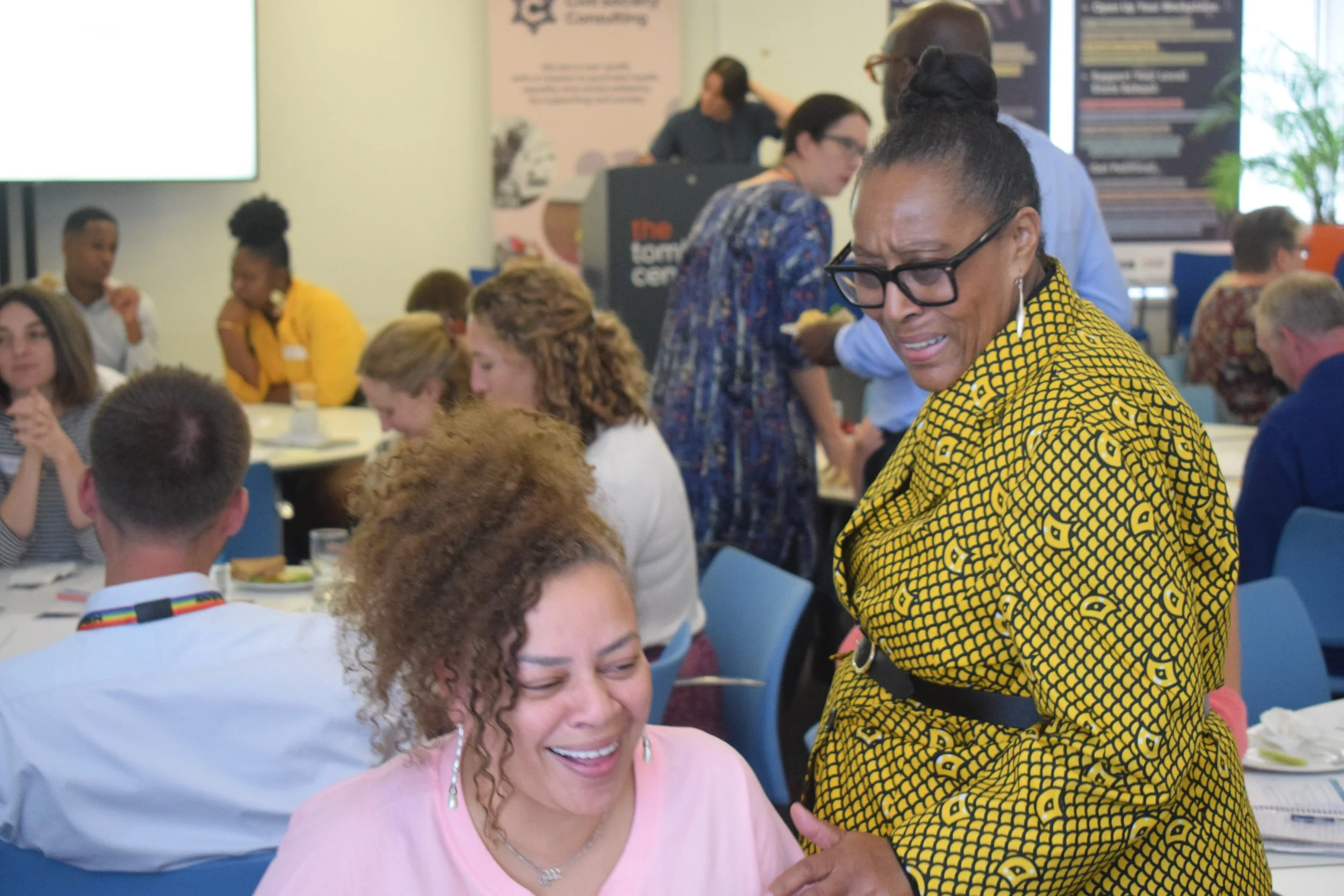
The sessions are fascinating, collaborative, honest - and good fun! They are perfect for team-building, providing opportunities to bond and build on strategy.
-
Anyone! It has been designed to be easily adapted to people of all ages, backgrounds and sectors.
Participants don’t need any professional experience of loneliness, we all have some personal exposure (whether first hand or not) that we can draw on.
The training was originally developed as a way of bringing together grassroots organisations, statutory sector professionals and/or community leaders working working in the same locality, enabling them to understand their role as a cog in a tackling loneliness machine. It builds solidarity between those working on different - seemingly unrelated - issues.
The sessions also work well as a staff training and we can deliver a version to teams within larger organisations wanting to foster more connection.
We have adapted a short version for other contexts too, such as for university students or schools.
We will be especially happy to offer it to private businesses. We believe the corporate sector has a huge amount to offer and gain from tackling loneliness. As well as contributing positively to the wider issues around equality and economic growth, employers could solve many of the challenges they’re facing around staff wellbeing, productivity and retention with greater connection. If you are interested in learning more, read our blog Fostering Togetherness Through The Workplace or watch the recording of Togetherness and Economics.
-
You and your colleagues/partners will come away with:
A deeper understanding of what loneliness is, it’s causes and the impact loneliness has on individuals, community and society.
A shared understanding which provides the foundations for collective action.
Strong, authentic and lasting lasting relationships
Being united behind a core framework, principles and language
Creative solutions and/or an emerging action plan co-produced by the people in the room
Confidence to employ the (free) 32 Steps to Togetherness resource - a manual of 32 practical steps we can all take to build connections within and between communities

Why now?
Rising hate crime. St. Georges flags. Shamefully large protests in our capital city, as well as elsewhere. People of Colour and other identities are living in fear.
Connection is both the short and the long-term solution. In the here and now, we need connection within and between communities to create joy, hope, resilience, and to heal. Looking at the bigger picture, togetherness also provides the conditions we need to change the system that is creating these problems in the first place.
Since tackling loneliness is only step one, there is no time to waste.